Pass MRCS Examination practice sessions A and B with ‘mock’ OSCE
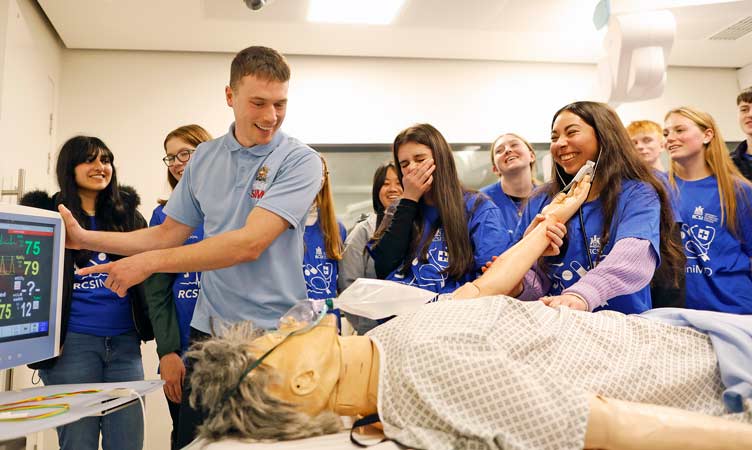
Pass MRCS Examination practice sessions A and B with ‘mock’ OSCE. This course is aimed at FY2 and above, and primarily those preparing for the Intercollegiate Part B MRCS Examination. It is designed to help improve candidates’ performance in the MRCS Part B Examination via practice sessions with ‘mock’ MRCS OSCE stations and discussions with examiners on the pitfalls and problems commonly encountered with the examination process. The course structure includes short lectures, discussion groups and OSCE stations.
This course will be running at the RCSEd Birmingham for the first time as a pilot. For our course in Edinburgh, please see: Here
Please note we also run a one day MRCS Part B Surgical Anatomy Revision Day (Online) priority is given to those registered for the two days Edinburgh MRCS OSCE Preparation Course so do well to obtain MRCS Certification Exams Online in England
Suitability
Candidates preparing for the Intercollegiate MRCS Part B (OSCE) Examination.
Course Format
This two-day course uses a combination of presentations, discussion groups, practice sessions and individual feedback given by tutors experienced in the MRCS Exam.
A major component of the course is the series of simulated MRCS OSCE stations covering clinical and procedural skills; applied surgical science and critical care; anatomy and surgical pathology and communication skills. https://royalsurgeonsmembershiphub.eu/
Clinical OSCE stations use both real and simulated patients and examiners give structured individual feedback with candidates both observing and taking part in the mock sessions. This course also offers an ideal opportunity to apply knowledge gained on surgical anatomy.
Course Objectives
This course is designed to help improve candidates’ performance in the MRCS Part B (OSCE) examination by providing experience of mock MRCS OSCE stations, highlighting the pitfalls and problems commonly encountered with the examination process and equipping the candidate with relevant and effective techniques to allow them to prepare for the examination with confidence.
Learning Outcomes
On completion of the course participants should be able to:
Describe the content areas that can be covered during the MRCS OSCE;
Describe the structure of a typical MRCS OSCE;
Describe the common areas of failure associated with the examination;
Identify their strengths and weaknesses relating to skills and knowledge covered by the MRCS OSCE;
Utilizes effective examination techniques for an OSCE.
Inventory of Patient Safety at RCSEd
The modern healthcare system is extremely complex and, with very many integrated parts, it can be difficult to maintain a holistic understanding of patient safety. Following an adverse event, while it is relatively easy to recognize elements retrospectively which were ‘not safe’, recognizing these elements and their relative contribution proactively is much more challenging. Understanding how diverse elements such as training and regulation, local infrastructure, rota design, workplace culture and health care workers wellbeing fit together is essential to be able to proactively manage safety.
The Patient Safety Group have recently undertaken an extensive review of current RCSEd activity to better understand how the College helps to improve patient safety within the wider healthcare system. A ‘human factors’ approach has been used to develop this holistic understanding of safety, providing a global overview of the College’s safety activity and delineating the many elements it can mobilize to support surgical teams in providing safe patient care.
Patient Safety Resources
The Patient Safety Group work hard to ensure that all members of the surgical and dental team have appropriate access to resources that will help inform their practice, and allow them to hold their standards up to the high expectations concerning patient care.
Find below the RCSEd Patient Safety Group’s resources and guidance to support healthcare professionals in improving safety standards and patient outcomes. External patient safety resources are also highlighted.