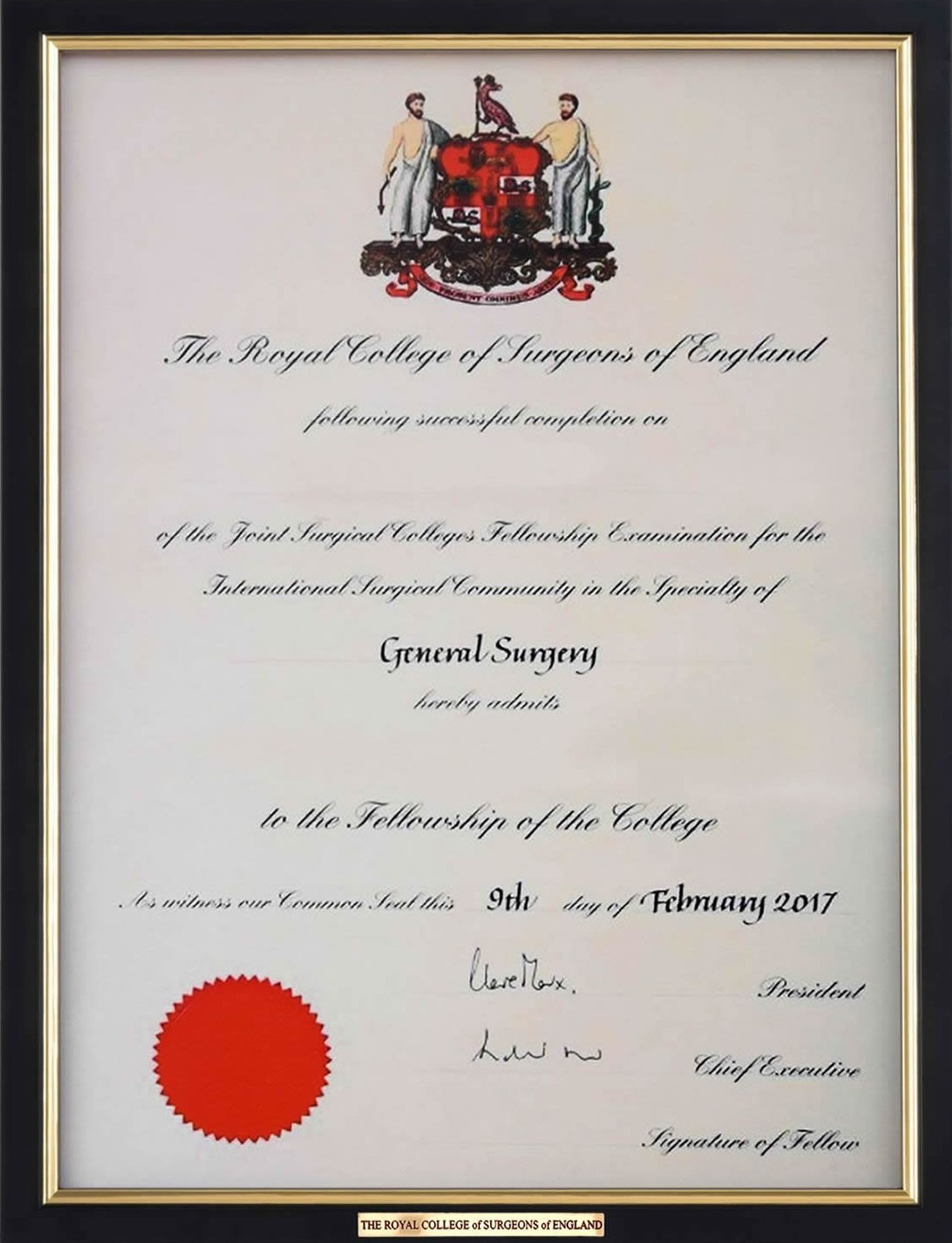
Obtain RCS Membership Certificate Online in England
Obtain RCS Membership Certificate Online in England and learn how skilled surgeons can obtain the RCS Membership Certificate online in England with expert guidance, reduced delays, and a clear pathway. Discover eligibility, steps, and support options. Start your application today. The Royal College of Surgeons of England is the professional body for surgery. As part of our commitment to enabling surgeons to achieve and maintain the highest standards of surgical practice and patient care we provide independent advice for government and policymakers on surgery and information to patients and the public. Position statements and reports – the College position on key issues affecting surgery. We also provide briefings on contemporary issues in surgery, including background information and statistics. Consultation responses – the College response to consultation documents from the government and other organisations.
Working with other bodies
The College works closely with a number of other bodies, which allows us to share our expertise and benefit from the expertise of others. The College is one of a number of medical royal colleges in the UK. The Academy of Medical Royal Colleges (AoMRC) facilitates and coordinates work between the colleges, allowing us to maintain a close relationship with the other professional bodies.
We also work alongside the surgical specialty associations, which represent the interests of, and set the standards for, various surgical specialties. Although these are separate organisations, many are based at the College and have representation on our Council. Additionally, the College is a member of the Association of Medical Research Charities (AMRC), which helps us further our aim to raise awareness of issues around surgical research and enables us to participate in discussions with other charities interested in promoting and supporting medical research.
At some point in their career/working lives, all doctors will need to call on specialty-specific knowledge that they may not have covered in their training. The Academy and the GMC have produced a high-level template that can be used to help support and signpost doctors in these situations. There are currently three areas of clinical practice that have developed materials to guide doctors in the best way to manage a specific clinical situation. The template and material are not part of a specialty curricula or assessment. They are designed to be relevant to all clinical knowledge areas and align to the GMC’s Generic Professional Capabilities and Good Medical Practice.
Message from the Academy Chair of Council
Medical knowledge is expanding at an increasing rate. The identification, understanding and treatment of many conditions has changed (and continues to do so) almost unrecognisably, in a short space of time. The framework for shared clinical practice is designed to provide specialty specific knowledge upon which any doctor can draw, at any time in their career, for those conditions where they are less confident and/or to which they have had less direct clinical exposure. The content is designed to apply to all clinical situations and can also act as Continuous Professional Development (CPD) for all doctors rather than being part of specialty curricula and assessment. It is aligned to both the GMC’s Generic Professional Capabilities and Good Medical Practice. Our thanks are due to the various colleges who have brought the framework to life by providing three exemplars covering eating disorders, intellectual disabilities, and neuro-developmental conditions. These include but are not limited to, Royal College of Psychiatrists, Royal College of Emergency Medicine, Royal College of Paediatrics and Child Health, Royal College of General Practitioners and Royal College of Physicians of London.
Recent Comments